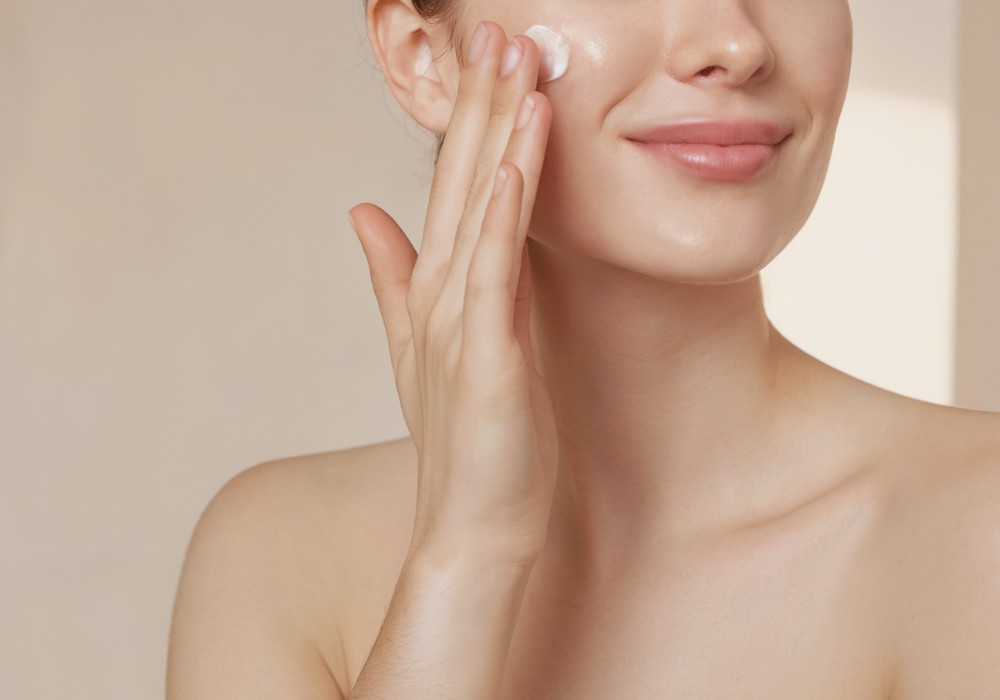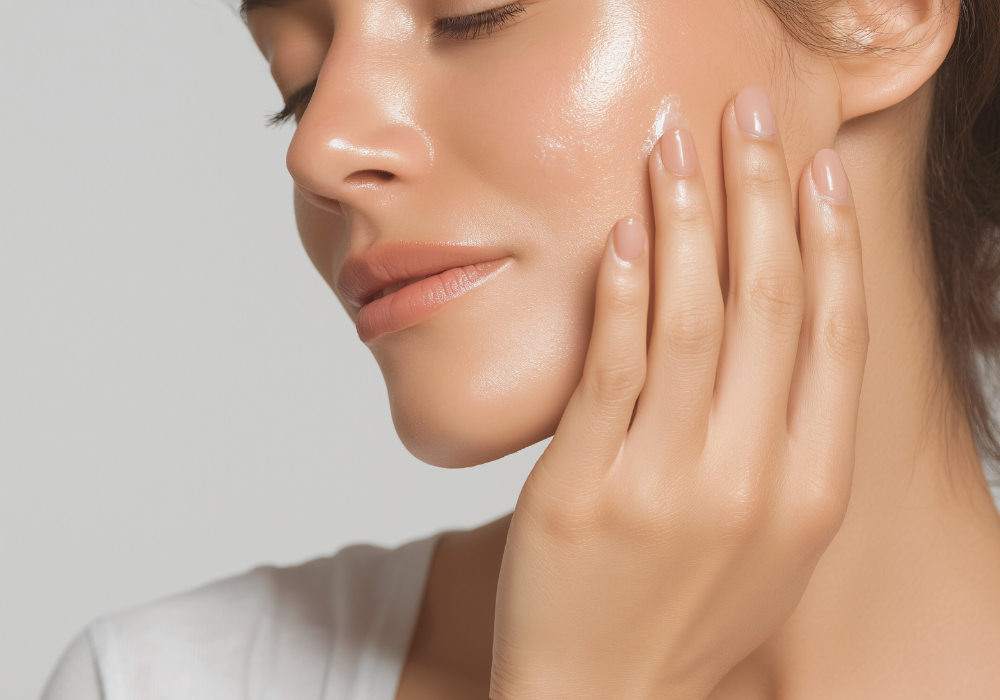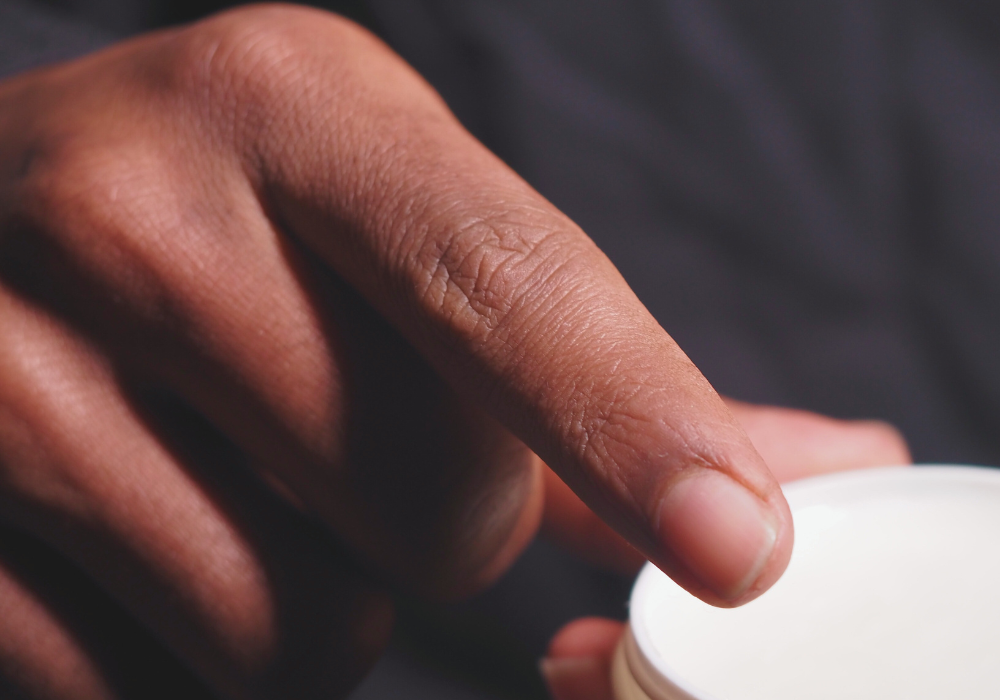
From washing his face with a wet rag to using $430 Chanel balm on red carpets—Michael B. Jordan's skincare journey mirrors what many men experience when they realize premium skincare doesn't have to be complicated. The Creed star's evolution from basic grooming to an educated approach shows that effective skincare is about simplifying your routine with science-backed products like an exfoliating daily cleanser that combines multiple benefits in one step. His transformation, largely credited to his relationship with model and beauty entrepreneur Lori Harvey, demonstrates that even Hollywood's busiest actors can maintain great skin without spending hours in front of the mirror.
Key Takeaways
-
Michael B. Jordan's skincare routine evolved from washing his face every 2-3 days with minimal products to a comprehensive system that includes cleansing, hydration, and targeted treatments
-
His daily routine remains surprisingly simple—focusing on essential steps like cleansing and moisturizing rather than complex multi-step regimens
-
Lori Harvey transformed his approach by introducing him to proper cleansers, serums, eye cream, and sunscreen, resulting in professional makeup artists complimenting his skin on set
-
For special occasions, Jordan's makeup artist uses luxury Chanel products including the $115 Revitalizing Cream and $35 blotting papers for red carpet appearances
-
The actor's philosophy balances minimalism with effectiveness—proving that premium skincare can be simplified without sacrificing results

What Makes Michael B. Jordan's Skincare Routine Stand Out
Jordan's approach to skincare is refreshingly honest. While many celebrities push elaborate routines with dozens of products, he's been candid about starting from "super low-maintenance" basics and gradually building up to a more educated regimen.
What sets his routine apart is the clear distinction between his daily minimalist approach and professional red carpet preparation. On typical days, Jordan keeps things simple—focusing on the essentials that actually make a difference. But when stepping onto the red carpet for events like the Creed III premiere, his makeup artist Tasha Reiko Brown applies luxury products to ensure his skin looks camera-ready.
This two-tier approach makes sense for most men. You don't need $430 face balm for your daily routine, but understanding the fundamentals of cleansing, exfoliating, and hydrating will deliver visible results.
The Actor's Approach to Skin Health
Jordan's philosophy centers on giving skin what it needs without overdoing it. His controversial statement about washing his face "every two, three days" shocked beauty editors, but there's reasoning behind it: "You've got to give your face a break. You don't want to keep stripping it down all the time."
This approach to preserving natural oils isn't necessarily wrong for everyone, though most dermatologists recommend daily cleansing adapted to your skin type. The key takeaway is Jordan's emphasis on not over-stripping the skin—a common mistake men make when they start paying attention to skincare.
The Evolution: From Basic to Educated Skincare
The most compelling part of Jordan's skincare story is the transformation documented by Lori Harvey herself. She revealed that he "washed with a wet rag" before she introduced him to proper skincare.
Harvey, who founded the skincare line SKN by LH, used Jordan as her "live test model" while developing her products. She put him on a complete routine including cleanser, serum, moisturizer, eye cream, and sunscreen. The results speak for themselves—Harvey noted that "makeup artists compliment" his skin now when he's on set.
Jordan's transformation timeline:
-
Pre-2019: Unknown routine, minimal attention to skincare
-
2019: Basic approach documented—shower, moisturize, cologne
-
2021: Lori Harvey transformation introduces comprehensive routine
-
2023: Professional red carpet preparation with Chanel products
-
2025: Mature routine balancing daily basics with special occasion luxury
What's particularly interesting is that Jordan didn't just passively accept Harvey's recommendations. He actively participated in product development, offering "good notes" including suggestions for a fresh scent and more bubbly foam in the cleanser. This hands-on involvement shows he genuinely understood what worked for his skin.
Essential Skincare Routine Steps Every Man Should Follow
Whether you're starting from zero like Jordan did or looking to refine your approach, every effective skincare routine follows the same fundamental steps. Understanding these basics helps you build a regimen that fits your lifestyle while delivering visible results.
Morning vs. Evening Steps
Morning Routine Essentials:
-
Cleanse to remove overnight oil and debris
-
Apply serum or treatment products
-
Moisturize to hydrate and protect
-
Apply SPF (non-negotiable for sun protection)
Evening Routine Essentials:
-
Cleanse to remove dirt, sweat, and excess oil from the day
-
Exfoliate (2-3 times per week, not daily)
-
Apply treatment products or serums
-
Moisturize to support overnight skin repair
The key difference between morning and night routines is sun protection. During the day, SPF is essential—especially if you're using exfoliating products that make skin more sun-sensitive. At night, your skin can handle richer treatments and active ingredients that work during cellular repair cycles.
For men seeking to build a skincare routine, the focus should be on multifunctional products that combine benefits rather than layering multiple single-purpose items.
The Non-Negotiable Steps
While you can debate the finer points of skincare, three steps remain non-negotiable for maintaining healthy skin:
-
Cleansing: Removes impurities, excess oil, and environmental pollutants
-
Hydration: Maintains skin barrier function and prevents moisture loss
-
Sun Protection: Prevents premature aging and protects against UV damage
These three steps form the foundation. Everything else—serums, masks, specialty treatments—builds on this base but isn't strictly essential for basic skin health.
The First Step: Cleansing for Different Skin Types
Cleansing forms the foundation of any effective routine. The challenge is finding a cleanser that thoroughly removes impurities without stripping away your skin's natural protective oils—the exact balance Jordan struggled with before his transformation.
Different skin types need different approaches. Oily skin benefits from cleansers that control excess sebum without triggering rebound oil production. Dry skin needs gentle formulas that clean while maintaining moisture levels. Combination skin requires balanced approaches that address both concerns.
How to Identify Your Skin Type
Oily Skin Indicators:
-
Shiny T-zone (forehead, nose, chin) within hours of cleansing
-
Enlarged, visible pores
-
Prone to breakouts and congestion
-
Makeup tends to slide off or separate
Dry Skin Indicators:
-
Tight, uncomfortable feeling after cleansing
-
Flaking or rough texture
-
Fine lines more visible when dehydrated
-
Makeup appears patchy or cakey
Combination Skin Indicators:
-
Oily T-zone with normal or dry cheeks
-
Pores visible in some areas, not others
-
Breakouts concentrated in specific zones
Normal Skin Indicators:
-
Balanced moisture levels throughout the day
-
Few breakouts or dry patches
-
Even skin tone and texture
-
Products absorb well without residue
For men with sensitive skin, identifying triggers becomes equally important as knowing your basic skin type.
Cleansing Techniques That Work
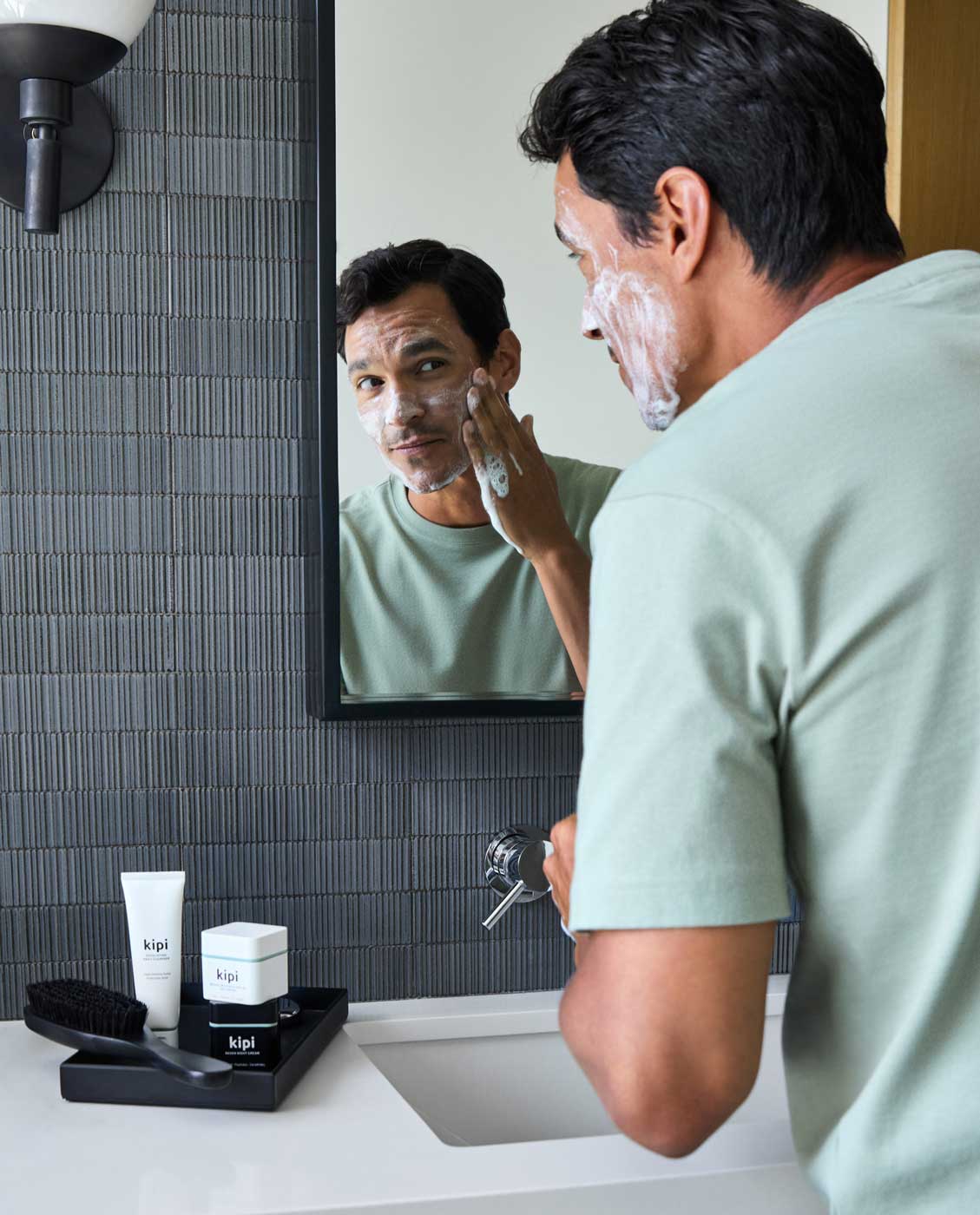
The technique matters as much as the product. Jordan's makeup artist demonstrated proper application during his Creed III preparation, showing how professional techniques differ from simply splashing water on your face.
Proper cleansing method:
-
Wet your face with lukewarm water (not hot—it strips natural oils)
-
Dispense a nickel-sized amount of cleanser into your palm
-
Add a bit of water and rub hands together to create lather
-
Apply in circular motions for 20-30 seconds
-
Focus on areas with more oil or congestion
-
Rinse thoroughly with lukewarm water
-
Pat dry with a clean towel (never rub aggressively)
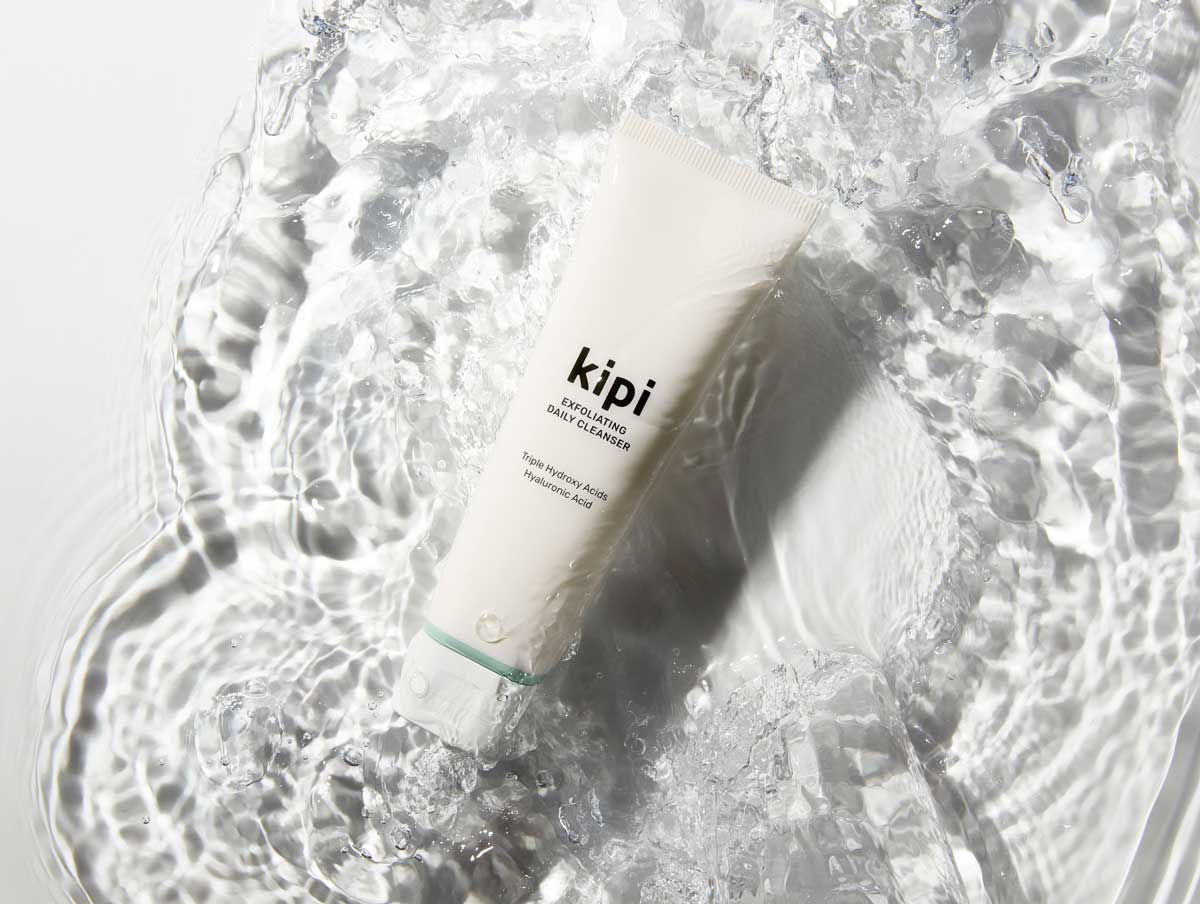
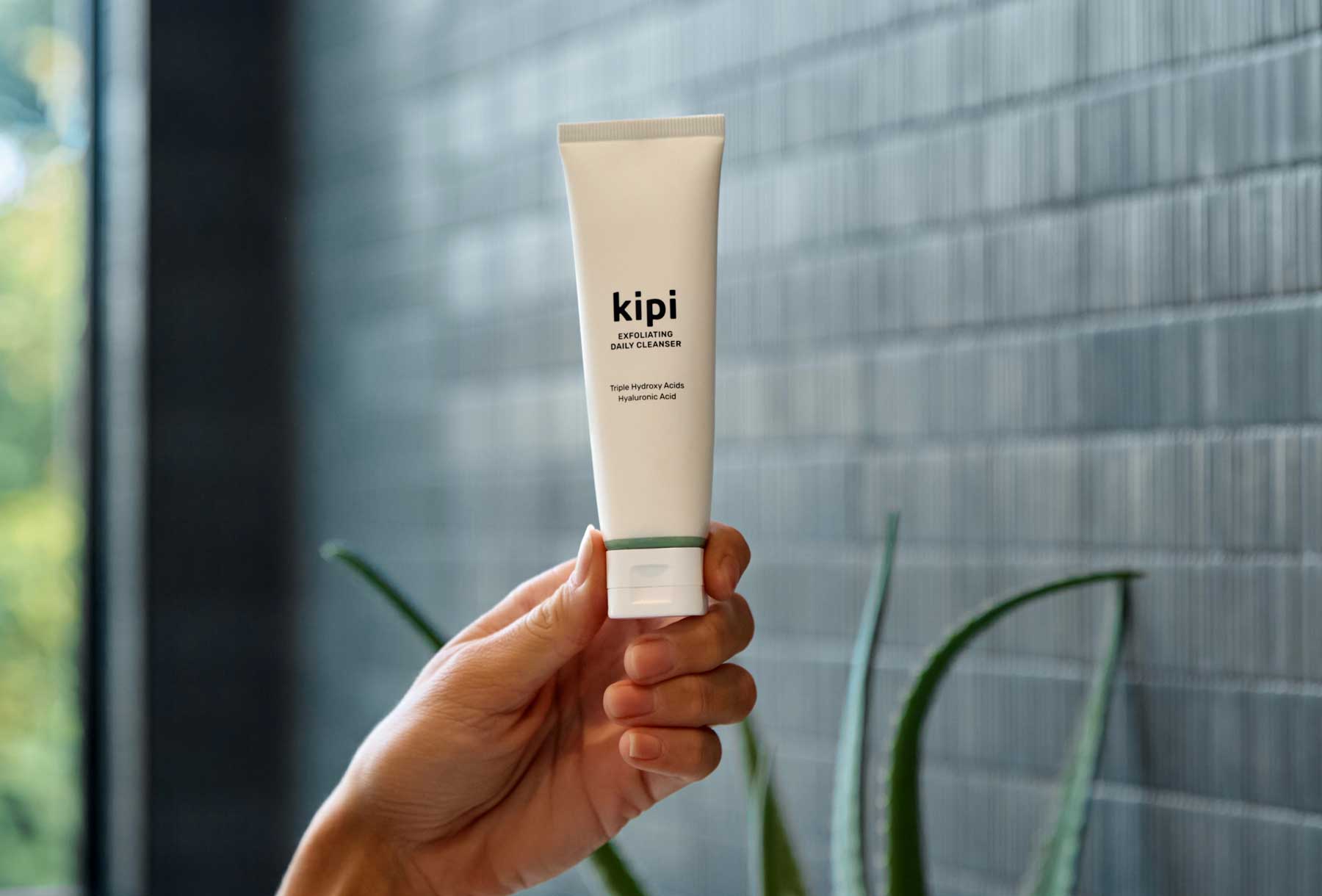
The Kipi Exfoliating Cleanser is formulated to work across all skin types—Normal, Dry, Combination, and Oily—with a pH-balanced formula (4.5-5.5) that matches your skin's natural acidity. This prevents the stripping effect Jordan wanted to avoid while still removing impurities, excess oil, and dead skin cells.
What sets this cleanser apart is the triple-action approach: it exfoliates with 2.4% hydroxy acids, removes impurities without residue, and hydrates with charged hyaluronic acid—all in one step. For men seeking Jordan's evolved approach without the complexity, this represents the "premium skincare simplified" philosophy.
Exfoliation: The Key to Glowing Skin
Exfoliation removes the dull, dead surface layer of skin that makes complexions look tired and uneven. This step is where Jordan's routine likely saw the biggest upgrade after meeting Lori Harvey, transitioning from basic face washing to understanding how chemical exfoliants renew skin.
Chemical vs. Physical Exfoliation
Physical Exfoliation uses small particles or beads to manually scrub away dead skin. Think traditional scrubs with walnut shells or microbeads. While these create an immediate smooth feeling, they can irritate skin and cause micro-tears if you press too hard.
Chemical Exfoliation uses acids to dissolve the bonds between dead skin cells, allowing them to shed naturally. This method tends to be gentler and more effective, especially for men who shave regularly and already experience mechanical exfoliation.
The science behind chemical exfoliation involves three main types of hydroxy acids:
Alpha-Hydroxy Acids (AHAs)
-
Water-soluble acids like glycolic and lactic acid
-
Work on the skin's surface to brighten and smooth
-
Particularly effective for sun damage and uneven tone
-
Can increase sun sensitivity (SPF becomes critical)
Beta-Hydroxy Acids (BHAs)
-
Oil-soluble acids like salicylic acid
-
Penetrate into pores to clear debris and oil
-
Ideal for oily, acne-prone skin
-
Help prevent ingrown hairs from shaving
Polyhydroxy Acids (PHAs)
-
Larger molecular structure than AHAs
-
Gentler with less irritation potential
-
Provide exfoliation plus hydration
-
Good for sensitive skin
How Often Should Men Exfoliate
For most men, exfoliating 2-3 times weekly with dedicated treatments provides optimal results. However, gentler daily exfoliation with low-concentration acids integrated into cleansers offers consistent renewal without irritation.
The Kipi Exfoliating Cleanser uses a triple-action hydroxy acid blend at safe daily-use concentrations:
-
1% Alpha-Hydroxy Acid Complex: Citrus fruit extract blend that brightens and gently exfoliates
-
0.4% Beta-Hydroxy Acid Complex: Salicylic acid that refines texture and clears pores
-
1% Gluconolactone: Polyhydroxy acid that exfoliates while maintaining hydration
This balanced approach allows for daily use without the over-exfoliation that causes redness, sensitivity, or that tight, stripped feeling Jordan mentioned wanting to avoid. The acids work while you cleanse, breaking down dull surface cells and removing debris from pores—then rinse away completely.
For external use only. Due to the presence of alpha hydroxy acids, we recommend using SPF during the day while using this product.
Hydration: Non-Negotiable for Men's Skin
When Lori Harvey saw Jordan washing his face "with a wet rag," one of her first interventions was introducing proper hydration. She emphasized the importance of serum and moisturizer—two products many men overlook.
Hydration maintains your skin's barrier function, prevents moisture loss, and actually helps regulate oil production. Counterintuitively, even oily skin needs hydration. When skin gets dehydrated, it often overproduces oil to compensate, creating a vicious cycle.
Why Hydration Differs from Moisturization
These terms get used interchangeably, but they represent different actions:
Hydration adds water to skin cells. Hydrating ingredients are humectants—they attract and bind water molecules. Think hyaluronic acid, glycerin, or natural sugars.
Moisturization seals that water in and prevents evaporation. Moisturizing ingredients are occlusives and emollients—they create a protective layer. Think oils, butters, and ceramides.
Effective products do both: they hydrate skin cells with water-binding ingredients, then lock that moisture in with protective barriers. This dual action prevents the tight, uncomfortable feeling that comes from water evaporating too quickly after cleansing.
Ingredients That Lock in Moisture
Hyaluronic Acid is a powerhouse hydrator that holds up to 1,000 times its weight in water. The challenge has always been that standard hyaluronic acid molecules struggle to penetrate deeply and can rinse away easily during cleansing.
Next-generation Charged Hyaluronic Acid solves this problem. Engineered to carry a positive charge, it enhances binding to skin for effective hydration even after rinsing. The Kipi Exfoliating Cleanser incorporates 0.1% Charged Hyaluronic Acid specifically to prevent the dryness most cleansers cause.
DL-Panthenol (Pro-vitamin B5) at 1% concentration supports your skin's natural barrier while providing soothing benefits. It helps skin retain moisture and recover from daily stressors like shaving or environmental exposure.
Moisture-Locking Natural Sugars form a hydrating matrix on skin's surface. The blend of xylitol, xylitylglucoside, and anhydroxylitol in advanced formulations optimizes water reserves and improves barrier function for immediate and long-term hydration.
This combination delivers what Jordan needed: cleansing and hydration in one step, without the stripped, tight feeling that made him avoid daily face washing in the first place.
Building a Simple Daily Routine That Works
Jordan's evolution shows that you don't need to jump from zero to a 10-step regimen overnight. His progression from wet rag to educated routine happened gradually, with each step adding genuine value rather than complexity for its own sake.
Sample Morning Routine
Step 1: Cleanse (30-45 seconds) Massage a nickel-sized amount of cleanser onto a damp face and neck in circular motions for 20-30 seconds. This removes overnight oil and prepares skin for the day. Rinse thoroughly with lukewarm water and pat dry.
Step 2: Moisturize (30 seconds) While skin is still slightly damp, apply moisturizer to lock in hydration. This is the step Jordan emphasized even in his "super low-maintenance" days.
Step 3: SPF (30 seconds) Apply broad-spectrum sunscreen to face and neck. Non-negotiable if you're using exfoliating products, which increase sun sensitivity.
Optional: Fragrance Jordan applies cologne post-moisturizer, then again after dressing for layered scent.
Total time: Under 2 minutes
Sample Evening Routine
Step 1: Cleanse (30-45 seconds) Remove the day's accumulation of dirt, sweat, and excess oil. If you work out, cleanse immediately after to prevent sweat-induced breakouts.
Step 2: Treatment Products (1 minute, if used) This is when you'd apply serums or targeted treatments. Lori Harvey introduced Jordan to this step with SKN by LH serum.
Step 3: Moisturize (30 seconds) Evening moisturizers can be richer than morning formulas since you don't need to worry about SPF or makeup going on top.
Optional: Eye Cream Harvey added this to Jordan's routine. Applied to the delicate under-eye area to address fine lines and dark circles.
Total time: 2-3 minutes
The Kipi approach simplifies this further by combining exfoliation, cleansing, and hydration in one product. Gentle enough for morning and night use, it delivers Jordan's educated skincare approach without requiring multiple steps or products.
How Long Each Step Should Take
Jordan's transformation demonstrates that effective skincare doesn't require elaborate time commitments:
-
Cleansing: 20-30 seconds of actual massaging (not including rinse time)
-
Serum application: 30-60 seconds
-
Moisturizer: 30 seconds
-
SPF: 30 seconds
His makeup artist's red carpet prep shows that even professional applications don't require excessive time—just proper technique and quality products.
Frequently Asked Questions
Does Michael B. Jordan still use Lori Harvey's SKN by LH products after their breakup?
Since their relationship ended in 2022, it's unclear whether Jordan continues using the SKN by LH system. He served as her "live test model" during product development and was reportedly very engaged with his routine while they were together. However, the transformation she initiated—educating him about proper cleansing, serums, and sunscreen—likely influenced his approach permanently, even if he switched to different specific products.
Can you achieve red carpet skin without luxury products?
Yes. While Jordan's makeup artist uses $430 Chanel balm for red carpet appearances, the core principles—thorough cleansing, proper hydration, and targeted exfoliation—work at any price point. The key is choosing science-backed formulations with proven active ingredients at effective concentrations. Premium doesn't always mean expensive; it means transparent ingredient disclosure, proper pH balance, and multifunctional benefits. Focus on products that list specific percentages of active ingredients and are formulated to work with your skin's natural biology rather than against it.
How do you prevent ingrown hairs like Michael B. Jordan deals with?
Jordan openly mentions using "tweezers for ingrowns" as part of his routine. Prevention is more effective than extraction. Regular exfoliation removes the dead skin cells that trap hairs beneath the surface. Chemical exfoliants (particularly BHA/salicylic acid) penetrate into follicles to prevent blockages. Proper shaving technique also matters—shave in the direction of hair growth, use a sharp blade, and never stretch skin while shaving. If ingrowns are severe, consider professional treatments or adjusting your shaving frequency.
Should you wash your face every day or follow Jordan's 2-3 day approach?
While Jordan initially washed his face "every two, three days," most dermatologists recommend daily cleansing—especially for men who work out, live in urban environments, or use sunscreen. The solution to his concern about stripping natural oils isn't less frequent washing; it's using a gentle, pH-balanced cleanser that removes impurities without disrupting your skin barrier. If you're using the right cleanser, daily face washing won't cause the tight, uncomfortable feeling that made Jordan avoid it. His routine evolved once Lori Harvey introduced him to proper products.
How long does it take to see professional-level results at home?
Based on Jordan's transformation timeline—from Lori Harvey introducing him to proper skincare in 2021 to makeup artists complimenting his skin—expect 2-3 months of consistent use for noticeable, professional-quality results. Initial improvements in texture and hydration appear within 1-2 weeks, but the skin renewal cycle takes roughly 28-40 days. Significant changes in tone, texture, and overall appearance require several cycles. Consistency matters more than product cost. Jordan's routine works because he stuck with it and understood the science behind each step, not because he used the most expensive options available.