Keke Palmer has been refreshingly honest about her PCOS-related acne and hyperpigmentation, and her routine now centers on gentle exfoliation, layered hydration, and science-backed ingredients that support hormonal skin without over-drying or irritation. Much like the philosophy behind multifunctional cleansers, she focuses on doing more with less, combining benefits into streamlined steps that fit a busy lifestyle. After her PCOS diagnosis in 2020 and in her 2024 Vogue Beauty Secrets video, Palmer shows how a few well-chosen products—aimed at exfoliation, hydration, and protection—can effectively target hyperpigmentation and support clearer, healthier skin.
Key Takeaways
-
Palmer's routine centers on gentle chemical exfoliation and layered hydration to address PCOS-related acne and hyperpigmentation
-
Her "moisturize don't dry" philosophy challenges the common misconception that drying out skin prevents breakouts
-
The routine combines affordable drugstore products with targeted prestige treatments, proving effective skincare works at multiple price points
-
Current partnership with La Roche-Posay focuses on hyperpigmentation, the third most common facial concern in the U.S.
-
Palmer researches products specifically through reviews from people with similar skin tones to ensure compatibility

Keke Palmer's Core Skincare Philosophy
Palmer's approach to skincare changed dramatically after her PCOS diagnosis. The condition, which affects 6-12% of U.S. women of childbearing age, often triggers hormonal acne that traditional treatments struggle to address.
The "Moisturize Don't Dry" Approach
Most people assume drying out skin helps prevent breakouts. Palmer learned the opposite is true. "I think one of the things that we get confused about with skin is we assume that the more we dry it out, the better it'll be," she explained in a NewBeauty interview. "But actually, it's the reverse. Keeping it moisturized actually stops that sebum from over-producing to make your face moisturized, which actually results in more acne."
This philosophy mirrors the science behind modern cleansing—gentle exfoliation and adequate hydration support the skin barrier rather than stripping it. When skin is overly dry, it compensates by producing excess oil, creating a cycle that worsens acne.
Core principles of Palmer's philosophy:
-
Hydration prevents excess oil production
-
Chemical exfoliation over harsh physical scrubs
-
Barrier support through moisturizers and occlusives
-
Professional guidance from estheticians for personalized treatment
Product Research for Melanin-Rich Skin
Palmer takes a deliberate approach to product selection. "When I do any kind of product, I do check and see what kind of people have reviewed the product, particularly Black people, to know that somebody with obviously Black skin uses the product," she shared with xoNecole.
This research step addresses a gap in skincare marketing—many products aren't tested or reviewed on diverse skin tones. Hyperpigmentation, a primary concern for Palmer, presents differently on melanin-rich skin and requires specific ingredient considerations.
The Foundation: Cleansing Without Stripping
Palmer's cleansing routine has evolved from simple drugstore options to more targeted formulas. Her current approach prioritizes gentle exfoliation that removes impurities without compromising the skin barrier.
La Roche-Posay Mela B3 Gel Cleanser
The first step in her 2024 routine is the La Roche-Posay Mela B3 Gel Cleanser, a micro-peeling gel that combines niacinamide and gluconolactone. This cleanser addresses hyperpigmentation while providing gentle exfoliation—avoiding the harsh stripping that can trigger reactive oil production.
The formula's barrier-boosting properties align with Palmer's moisturize-first philosophy. Like Kipi's science-backed approach to cleansing, it combines multiple benefits—cleansing, mild exfoliation, and hydration—into a single step.
Why a Great Cleanser is Essential
A cleanser sets the foundation for everything that follows. Palmer's choice reflects key considerations: pH balance, active ingredients at effective concentrations, and compatibility with barrier-supporting ingredients.
Essential cleanser qualities for acne-prone skin:
-
Chemical exfoliants (AHAs, BHAs, or PHAs) for gentle cell turnover
-
Non-stripping surfactants that preserve natural oils
-
Hydrating ingredients to prevent over-drying
-
pH-balanced formulas that support the skin's natural acid mantle
For those dealing with similar concerns, a daily exfoliating cleanser that combines hydroxy acids with hydration can simplify the routine while addressing multiple skin needs.
Chemical Exfoliation: The Paula's Choice Effect
Palmer has consistently used Paula's Choice 2% BHA Liquid Exfoliant across her routine evolution—featured in interviews and routines from 2021 to 2024. This consistency speaks to its effectiveness for her hyperpigmentation concerns.
How Salicylic Acid Works
The product's 2% salicylic acid concentration targets hyperpigmentation through multiple mechanisms. As Dr. Naissan O. Wesley explained to Allure, salicylic acid is "known to dissolve debris that clogs pores and acts as an anti-inflammatory."
Beta-hydroxy acids (BHAs) like salicylic acid are oil-soluble, allowing them to penetrate pores and clear out excess sebum. For post-acne marks, the gentle exfoliation accelerates cell turnover, helping fade dark spots over time.
The product has over 4,300 reviews on Sephora and is also used by model Kaia Gerber, earning its "viral" status on social media.
Layering Exfoliants Safely
Palmer's routine includes multiple exfoliating steps—the Mela B3 cleanser's gluconolactone, Paula's Choice BHA, and weekly treatments. This approach works because the formulas use different acid types at measured concentrations, allowing her to address texture and tone without irritation.
Understanding how to layer exfoliants safely is crucial for preventing barrier damage. The key is starting slowly, monitoring skin response, and ensuring adequate hydration between steps.
Hydration and Balance: A Multi-Layer Approach
After exfoliation, Palmer focuses on rebuilding hydration through multiple lightweight layers. This approach is particularly important after using active ingredients that can temporarily compromise the skin barrier.
Thermal Water as a Hydration Base
Palmer alternates between Avène Thermal Spring Water and La Roche-Posay Thermal Spring Water as toning mists. These mineral-rich sprays provide an initial hydration layer while calming any redness from exfoliation.
A beauty editor with similar skin concerns noted that natural minerals from spring water "truly work wonders... As someone with eczema and occasional pimples, to me its the one thing that really keeps my skin in check," according to Hello Magazine.
Neutrogena Hydro Boost Serum
Following the thermal water, Palmer applies Neutrogena Hydro Boost Hyaluronic Acid Serum. This drugstore serum provides intense hydration through hyaluronic acid, which binds water molecules to the skin.
The lightweight, fast-absorbing formula layers easily under heavier moisturizers. At under $25, it proves that effective hydration doesn't require prestige pricing—a principle that guides simplified skincare routines.
The Power of Hyaluronic Acid
Hyaluronic acid can hold up to 1,000 times its weight in water, making it exceptionally efficient at delivering and maintaining hydration. When applied to damp skin (like after thermal water), it locks in moisture more effectively.
For maximum benefit, hyaluronic acid needs to be sealed in with occlusives—which brings us to Palmer's moisturizer choices.
Locking in Moisture: Moisturizer and Occlusives
Palmer's final skincare steps focus on sealing in all the hydration she's layered. This is where her "moisturize don't dry" philosophy really shows.
La Roche-Posay Toleriane Double Repair Moisturizer
The Toleriane Double Repair Moisturizer provides up to 48 hours of hydration through ceramide-3, niacinamide, and prebiotic thermal water. Vogue editors note it's "a wonderful option for nighttime use, particularly for those who have more dry skin."
Ceramides are essential lipids that make up the skin barrier. Supplementing them helps repair damage from acne, exfoliants, or environmental stressors. The niacinamide further addresses tone and texture concerns.
Aquaphor for Extra-Dry Areas
Palmer finishes her routine by applying Aquaphor Healing Ointment to particularly dry areas. This petroleum-based ointment creates an occlusive barrier that prevents water loss overnight.
"You can add Keke to the list of glam celebrity fans of Aquaphor!" noted a Hello Magazine beauty editor. The product's 41% petrolatum content, combined with glycerin and panthenol, makes it especially effective for healing.
Benefits of occlusive moisturizers:
-
Prevent transepidermal water loss (TEWL)
-
Support barrier repair overnight
-
Soothe irritation from active ingredients
-
Can be used on lips, cuticles, and other dry patches
Advanced Ingredients: Targeted Treatments
Beyond her daily routine, Palmer incorporates weekly treatments and targeted serums that address specific concerns with higher concentrations of active ingredients.
La Roche-Posay Mela B3 Dark Spot Serum
Palmer's partnership with La Roche-Posay centers on the Mela B3 Dark Spot Corrector Serum, which contains Melasyl—a molecule developed through 18 years of research. The serum also features 10% niacinamide for tone correction.
"I've just gotten into it and I'm learning so much about it. I'm using it morning and night every day," Palmer told NewBeauty. "I 100-percent believe that there will be positive effects considering all of the success that I've had with all their other products."
The product underwent a 5-month clinical study demonstrating efficacy on stubborn dark spots—a concern that ranks as the third most common facial treatment needed in the U.S.
Weekly Vitamin C Treatments
For self-care moments, Palmer uses Dr. Dennis Gross Vitamin C+ Treatment Masks. These sheet masks combine 15% vitamin C with lactic acid for brightening and gentle exfoliation.
Palmer describes using these masks "for fun and nourishment"—acknowledging that skincare can be both effective and enjoyable. The professional-grade formulation delivers anti-aging and brightening benefits in a single treatment.
The Science Behind Vitamin C
Vitamin C (ascorbic acid) addresses hyperpigmentation by inhibiting tyrosinase, the enzyme responsible for melanin production. At 15% concentration, it also provides antioxidant protection against environmental damage that can worsen dark spots.
Combined with lactic acid—an alpha-hydroxy acid—the masks accelerate cell turnover while delivering brightening benefits. This combination approach mirrors the multi-functional philosophy of effective skincare.
Sun Protection: The Non-Negotiable Step
Palmer completes her morning routine with Cay Skin Isle Glow Face Lotion SPF 45, a hybrid sunscreen that provides broad-spectrum protection without a white cast—crucial for deeper skin tones.
Why SPF Matters for Hyperpigmentation
Sun exposure triggers melanin production, which worsens existing dark spots and can create new ones. For anyone using exfoliating acids—as Palmer does daily—sun protection becomes even more critical since these ingredients increase photosensitivity.
The American Academy of Dermatology recommends SPF 30 minimum for daily use. Palmer's choice of SPF 45 provides additional protection, particularly important given her use of alpha-hydroxy acids.
Key SPF considerations for melanin-rich skin:
-
Mineral-chemical hybrid formulas that avoid white cast
-
Broad-spectrum protection (UVA and UVB)
-
Water-resistant formulas for all-day wear
-
Reef-safe ingredients for environmental responsibility
Cay Skin, founded by model Winnie Harlow who has vitiligo, specifically addresses the needs of diverse skin tones. The dewy finish also preps skin for makeup application—Palmer's next step in her full routine.
Routine Evolution: What She's Used Before
Palmer's current routine represents years of experimentation. Understanding her skincare journey shows how needs change with age, lifestyle, and medical discoveries.
The 2021 Routine: Drugstore Simplicity
In her 2021 YouTube video, Palmer revealed a much simpler routine: Cetaphil Daily Facial Cleanser, Paula's Choice 2% BHA Liquid Exfoliant, Noxzema Classic Clean, and basic SPF.
This routine, recommended by her father, focused on gentle cleansing and consistent exfoliation. At under $50 total, it proved that effective skincare works at drugstore price points.
Esthetician-Recommended Treatments
Palmer has also used products from esthetician Renée Rouleau, including the Rapid Response Detox Masque and Triple Berry Smoothing Peel. These professional-grade treatments address active breakouts (the salicylic acid mask) and hyperpigmentation (the mandelic acid peel).
As Dr. Ellen Marmur explained to Allure, mandelic acid "gently exfoliates and increases cell turnover to lessen the appearance of acne, dull skin, uneven texture, and hyperpigmentation."
Palmer credits professional guidance as essential: "Obviously, I would say it's expensive, but one of the things that helped me the most is going to see an esthetician, just because they're constantly working on it and helping you every step of the way," she shared with Allure.
Body Care: The $11 Self-Care Hack
Palmer's body care routine demonstrates that effective skincare extends beyond the face—and doesn't require a premium price tag.
The Two-Step SheaMoisture System
In partnership with SheaMoisture, Palmer revealed her time-saving body routine: the Manuka Honey & Mafura Oil Intensive Hydration Shea Sugar Body Scrub followed by the matching body wash.
"Step one, exfoliate. You got to get that dead skin off, baby," Palmer told Yahoo Lifestyle. The scrub costs under $12 and contains fair trade shea butter, manuka honey, oatmeal, and oat milk.
Quick Self-Care for Busy Parents
As a new mother, Palmer developed this streamlined approach for rushed moments. "Sometimes the only self-care I get is five minutes, but trust me I make it count," she explained to Good Housekeeping.
The two-step system addresses multiple needs—exfoliation removes dead skin cells while the body wash delivers hydration. Pairing the products keeps her "skin glowing" and "mood lifted" even during hectic days.
This approach mirrors the efficiency principle behind streamlined skincare routines—fewer steps that deliver multiple benefits work better for real life than elaborate routines that get abandoned.
Pregnancy and Postpartum Skin Changes
Palmer's skin journey took an unexpected turn with motherhood. Her experience highlights how hormonal fluctuations affect skin at different life stages.
Better Skin During Pregnancy
"Insanely enough, my skin was better when I was pregnant. I think a lot of my skin issues came from hormones," Palmer told NewBeauty. This improvement isn't uncommon—pregnancy hormones can temporarily stabilize acne for some women with PCOS.
Postpartum Acne Return
The relief was short-lived. "It was the most horrifying thing in the world to see my acne come back and have all those fluctuations again after having my son," Palmer shared in the same NewBeauty interview.
This post-pregnancy acne resurgence drove her to refine her routine further, leading to the La Roche-Posay partnership and the targeted hyperpigmentation treatments she uses today.
Adapting the Routine for Different Skin Types
While Palmer's routine addresses her specific concerns—PCOS-related acne, hyperpigmentation, and occasional dryness—the principles can be adapted for various skin types.
For Oily Skin
Those with excess oil production can benefit from Palmer's layered hydration approach. Using lightweight, water-based hydrators (like hyaluronic acid serums) prevents the over-drying that triggers reactive sebum production.
The Paula's Choice BHA is particularly effective for controlling oily skin since salicylic acid penetrates oil-filled pores. Skipping the heavy occlusives and focusing on gel-based moisturizers keeps skin balanced.
For Dry Skin
The multi-layer moisturizing approach—thermal water, hyaluronic acid serum, ceramide moisturizer, and occlusives—works exceptionally well for chronically dry skin. Adding facial oils between the serum and moisturizer provides extra lipid support.
For Sensitive Skin
Palmer's routine, while effective for her, includes multiple exfoliating steps that might overwhelm sensitive skin. Starting with gentle exfoliation once or twice weekly, rather than daily, allows skin to build tolerance.
Choosing products formulated at appropriate pH levels and free from unnecessary fragrances helps minimize irritation. The La Roche-Posay Toleriane line, which Palmer uses, is specifically designed for sensitive skin.
Gender-Neutral Skincare
Palmer's routine demonstrates that effective skincare transcends marketing categories. The same principles—gentle exfoliation, adequate hydration, sun protection—apply regardless of gender.
For those seeking simplified approaches, one-step routines that combine cleansing, exfoliation, and hydration can deliver similar benefits with fewer products.
Key Lessons from Palmer's Skincare Journey
Palmer's evolution from struggling with PCOS acne to partnering with major skincare brands offers several takeaways for anyone building their own routine.
Consistency Over Complexity
Palmer keeps Paula's Choice BHA as a constant across routine iterations. This consistency allows her to track what actually works rather than constantly switching products.
Establishing a basic routine—cleanser, treatment, moisturizer, SPF—and maintaining it for at least 28 days (a full skin cycle) reveals true effectiveness. Statistics show that routine consistency correlates more strongly with skin improvement than product price or brand prestige.
Professional Guidance Matters
Palmer credits estheticians with helping navigate her PCOS skin. While product research matters, professional assessment can identify underlying issues (like hormonal imbalances) that topical treatments alone can't fix.
Hydration Prevents Breakouts
Her biggest learning—that moisturizing prevents acne rather than causing it—contradicts common assumptions. Skin stripped of moisture compensates by overproducing oil, creating a cycle that worsens breakouts.
Affordable Products Work
Palmer's routine spans from $4 (Noxzema) to $130 (Estee Lauder Advanced Night Repair). Her drugstore staples perform as essential steps, proving that price doesn’t always equal effectiveness.
Research for Your Skin Type
Palmer's practice of checking reviews from people with similar skin tones addresses a real gap in product testing and marketing. Hyperpigmentation presents differently on melanin-rich skin, requiring specific ingredient considerations.
The Kipi Difference: Premium Skincare Simplified
Palmer's skincare evolution demonstrates a key principle: effective routines combine science-backed ingredients in streamlined steps. This philosophy aligns with Kipi's approach to premium skincare.
Multifunctional Formulations
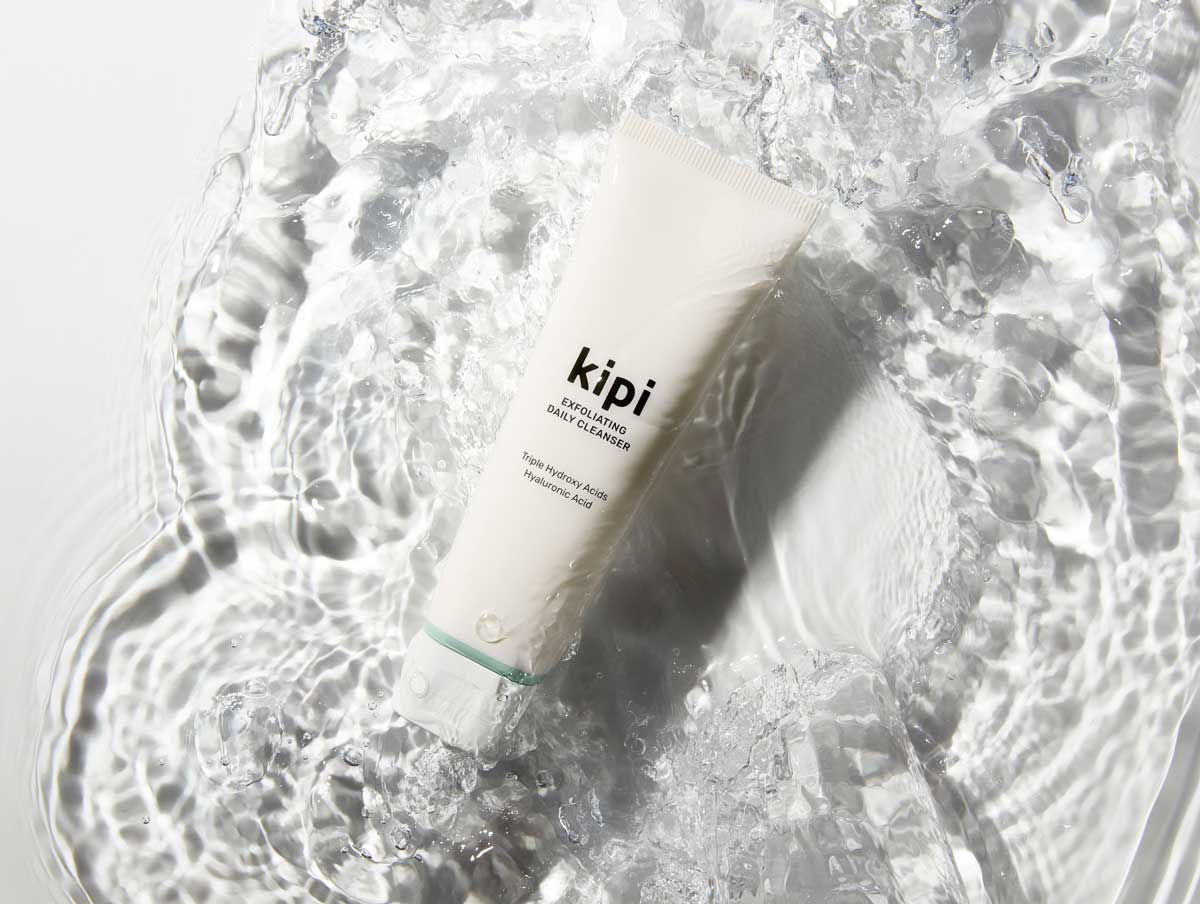
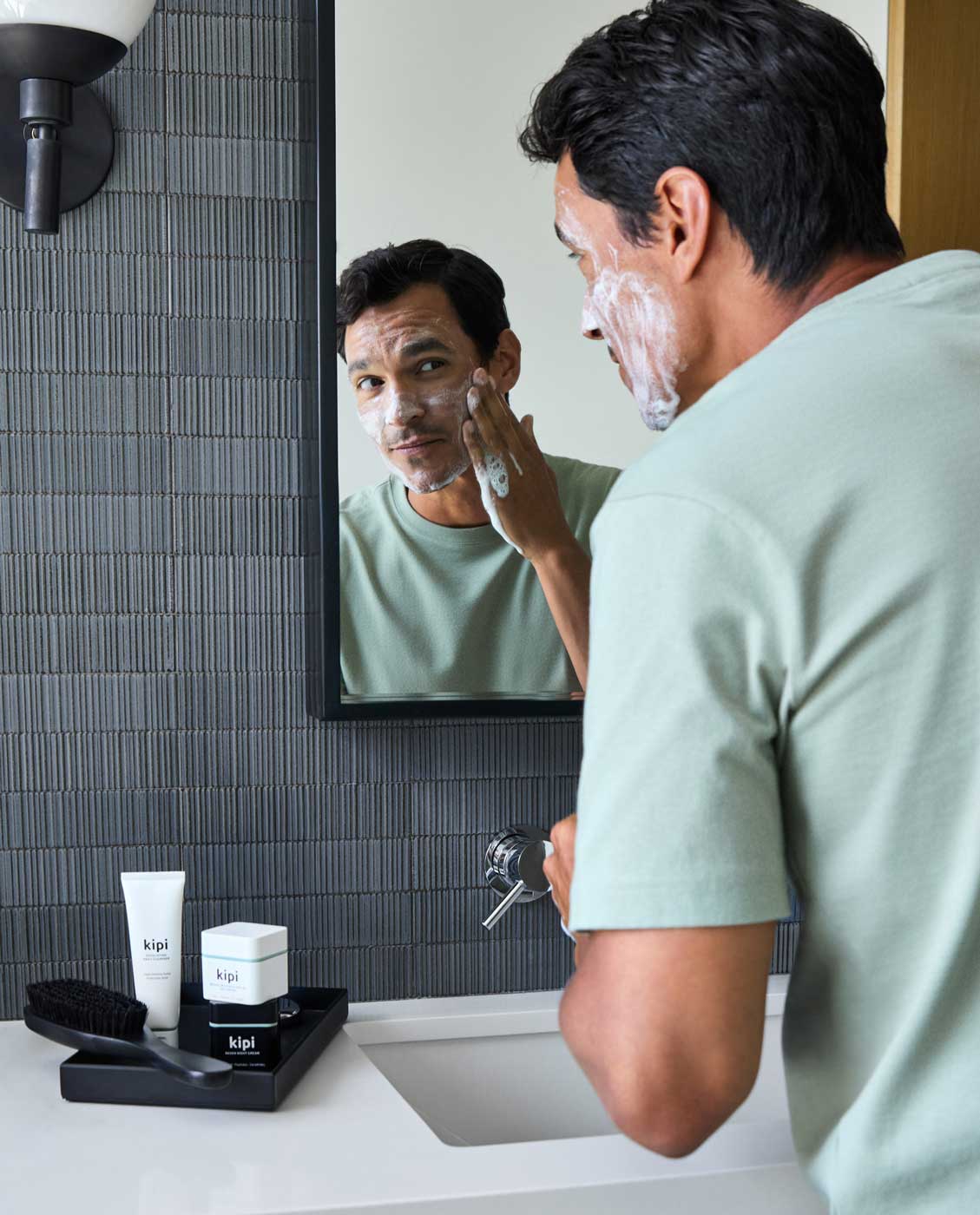
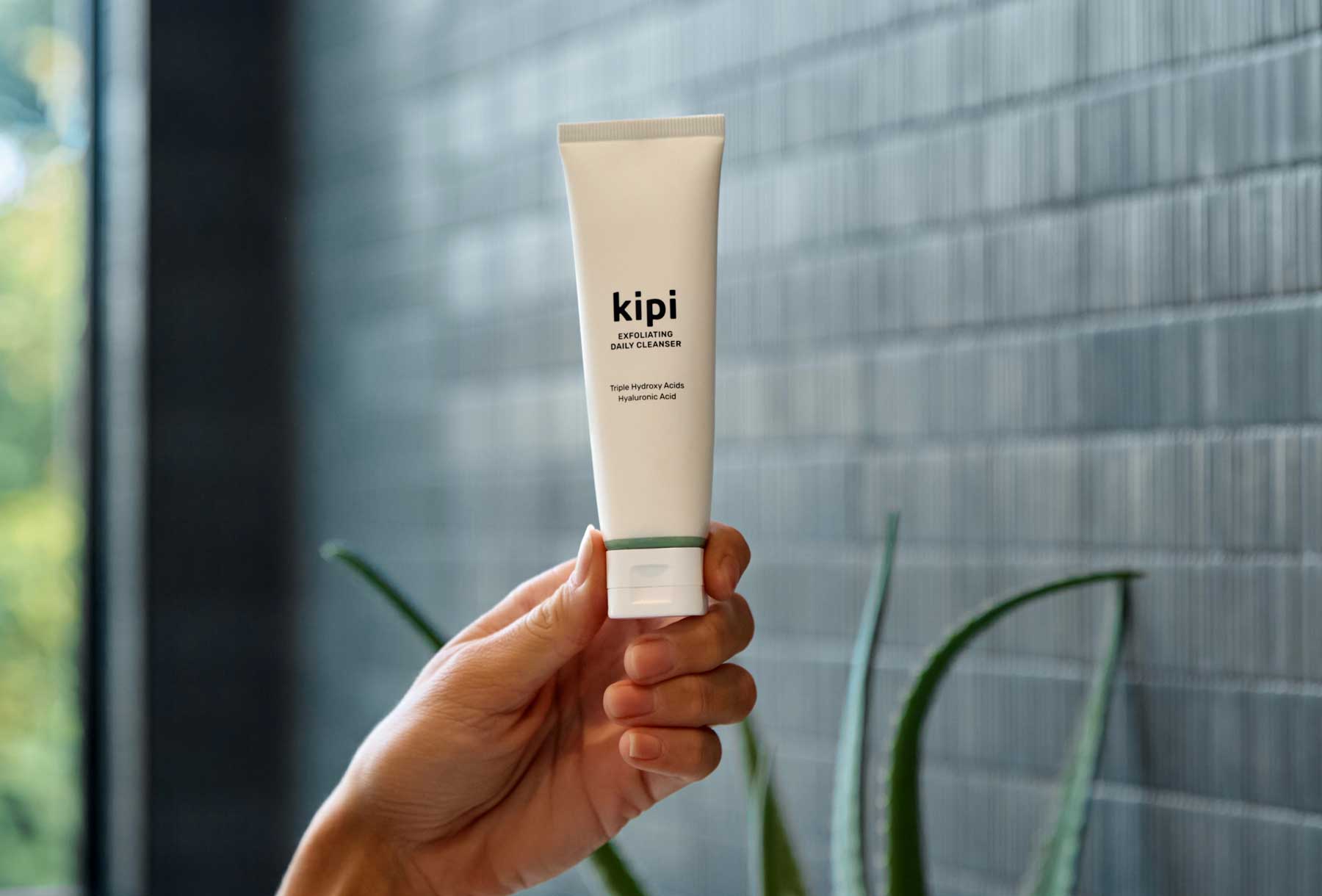
Rather than layering multiple single-purpose products, Kipi's Exfoliating Daily Cleanser combines Palmer's key principles in one formula:
-
Triple-action hydroxy acids (Alpha, Beta, and Polyhydroxy acids at 2.4% total) provide gentle exfoliation similar to Palmer's layered acid approach
-
Charged hyaluronic acid delivers the same hydration benefits Palmer gets from her Neutrogena serum
-
DL-Panthenol (Pro-vitamin B5) supports barrier function like Palmer's ceramide moisturizer
This consolidation saves time without compromising results—particularly valuable for those who, like Palmer post-baby, have limited minutes for self-care.
Science-Backed Ingredient Selection
Kipi formulates at skin's natural pH (4.5-5.5) and provides exact percentages of active ingredients—the transparency Palmer seeks when researching products. The cleanser's gluconolactone (a PHA) offers exfoliation without the irritation risk of higher-concentration acids.
The lightweight, non-greasy formula aligns with Palmer's preference for layered hydration. It rinses clean without residue or tightness—supporting her "moisturize don't dry" philosophy.
Simplified Routine, Visible Results
For those inspired by Palmer's journey but overwhelmed by the product count, a science-backed one-step routine can deliver similar benefits:
Morning:
-
Kipi Exfoliating Daily Cleanser (cleanses + exfoliates + hydrates)
-
SPF 30+ broad-spectrum sunscreen
Evening:
-
Kipi Exfoliating Daily Cleanser
-
Targeted treatment serum (if needed)
-
Moisturizer for your skin type
This approach captures Palmer's key steps—exfoliation, hydration, protection—in a format that fits real life. The subscription model ensures consistent use, which Palmer's journey shows matters more than product proliferation.
Ethical Production Standards
Like Palmer's attention to product sourcing and ingredient integrity, Kipi maintains vegan, cruelty-free standards. All products are sulfate and paraben-free, formulated in the USA, and shipped within 1-2 business days with free returns.
The TSA-approved 60ml size (2 oz) fits the travel needs Palmer faces as an actress and musician—professional-grade skincare that moves with your lifestyle.
Building Your Own Palmer-Inspired Routine
If Palmer's journey resonates with your skin concerns, here's how to adapt her principles:
Start with the Foundation
Choose a gentle, pH-balanced cleanser that incorporates mild exfoliation. Look for:
-
Chemical exfoliants (AHAs, BHAs, or PHAs) at 0.5-2% concentration
-
Hydrating ingredients like hyaluronic acid or glycerin
-
No harsh sulfates (SLS/SLES)
-
pH between 4.5-5.5
The Kipi Exfoliating Daily Cleanser meets these criteria while consolidating multiple steps.
Add Targeted Treatments
For hyperpigmentation:
-
Niacinamide 5-10%
-
Vitamin C 10-20%
-
Alpha-arbutin or kojic acid
-
Consistent SPF 30+ daily
For active acne:
-
Salicylic acid 0.5-2%
-
Benzoyl peroxide 2.5-5% (spot treatment)
-
Professional extraction from an esthetician
Layer Hydration Intelligently
Follow Palmer's approach:
-
Humectants (hyaluronic acid, glycerin) attract water
-
Emollients (ceramides, fatty acids) smooth skin
-
Occlusives (petrolatum, dimethicone) seal moisture
You don't need separate products for each step—many moisturizers combine all three.
Protect Consistently
SPF is non-negotiable for anyone using exfoliating acids. Choose formulas designed for your skin tone that provide broad-spectrum UVA/UVB protection.
Track and Adjust
Give each new product 4-6 weeks before evaluating effectiveness. Skin cycles take about 28 days, so premature switching prevents accurate assessment.
Frequently Asked Questions
Can I use multiple exfoliating products like Keke Palmer without irritating my skin?
Palmer uses several acid-based products—a cleanser with gluconolactone, Paula's Choice BHA, and weekly AHA treatments—but this approach requires caution. Start with one exfoliant 2-3 times weekly, then gradually increase frequency or add additional products only after skin builds tolerance.
How does PCOS affect skincare needs, and should I approach my routine differently?
PCOS affects 6-12% of women of childbearing age and often triggers hormonal acne, particularly along the jawline, chin, and cheeks. As Palmer discovered, the condition requires a different approach than typical acne treatment. The hormonal fluctuations cause excess sebum production, but over-drying skin worsens the problem by triggering reactive oil production.
Is it necessary to use expensive products to get results like celebrity skincare?
Palmer's routine proves otherwise. Her current setup includes products ranging from $11 (SheaMoisture body care) to $130 (Estee Lauder serum), with effective results coming from both price points. The drugstore staples—Neutrogena Hydro Boost Serum, Aquaphor, Paula's Choice—perform as essential routine steps. Focus on science-backed formulations rather than brand prestige. Many affordable brands now provide ingredient transparency and clinical testing that rivals luxury options.
How do I research products for my specific skin tone like Keke Palmer recommends?
Palmer's practice of checking reviews from people with similar skin tones addresses a real problem—many products aren't tested on diverse skin. To research effectively: look for review sections that include photos (many retailers now require photo verification), search YouTube for reviews from creators with your skin tone, check social media hashtags like #brownskincare or #melaninrich, and ask for samples before purchasing full-size products when possible.
Can I simplify Keke Palmer's multi-step routine and still see results?
Palmer's current routine includes 6-8 products for face alone. While effective for her specific concerns, most people can achieve similar benefits with fewer steps. The core principles—gentle exfoliation, adequate hydration, sun protection—can be condensed into a simplified routine.